
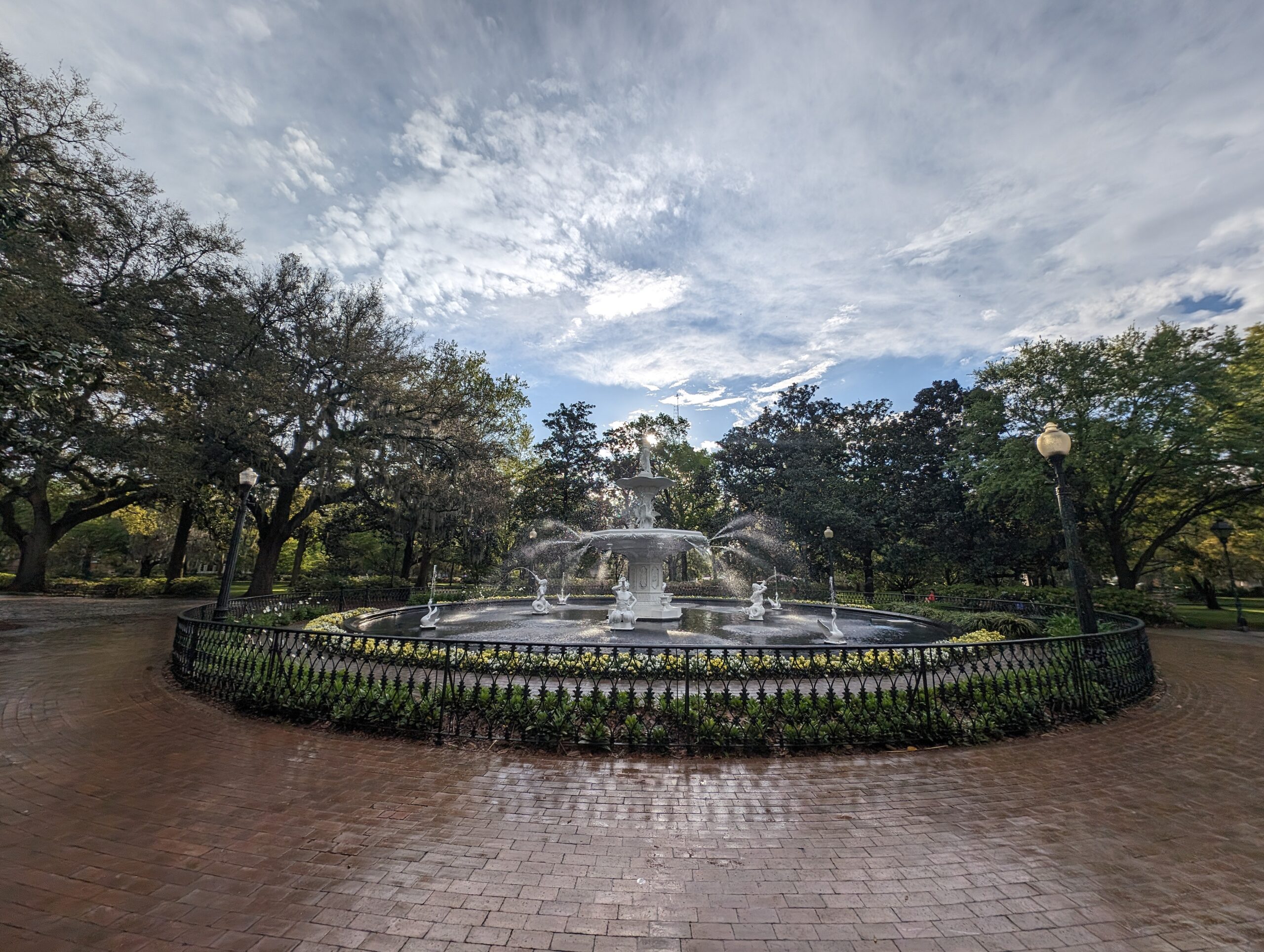
There are approximately four hundred thousand photographs of the Forsyth Park fountain on the internet. Most of them look identical. It is a beautiful fountain. It photographs easily. And almost nobody who photographs it knows where it came from or what it’s actually depicting.
Where the Fountain Actually Came From
The Forsyth Park fountain was installed in 1858, during one of Savannah’s wealthier antebellum periods. It is cast iron, manufactured in New York. Interestingly, it was not a unique design. The same — or nearly identical — fountain appears in other American cities from the same era, including New Orleans. In other words, the cast iron fountain was a catalog item in the mid-19th century. That fact somewhat undercuts the mythology of it as a singular Savannah creation.
The park itself predates the fountain by several years. City planners laid it out in the 1840s as Savannah expanded beyond Oglethorpe’s original grid.
The Sears Catalog Myth — Let’s Kill It
You will hear, with some regularity, that the Forsyth Park fountain was purchased from the Sears Roebuck catalog. It wasn’t. Sears Roebuck didn’t exist in 1858 — the company wasn’t founded until 1893, a full 35 years after the fountain was installed. That particular myth is impossible on its face.
What is true is that it was a catalog purchase — just not from Sears. Mid-19th century cast iron ornamental fountains were widely available through foundry catalogs, most of them produced in the Northeast. The J.L. Mott Iron Works catalog out of New York carried designs nearly identical to Savannah’s, and similar fountains from the same era turn up in cities across the country. So the “bought from a catalog” part is accurate. The Sears attribution is just bad telephone — someone attached a familiar catalog brand name to a real but older practice, and the story stuck. Now you know better.
What It’s Actually Depicting
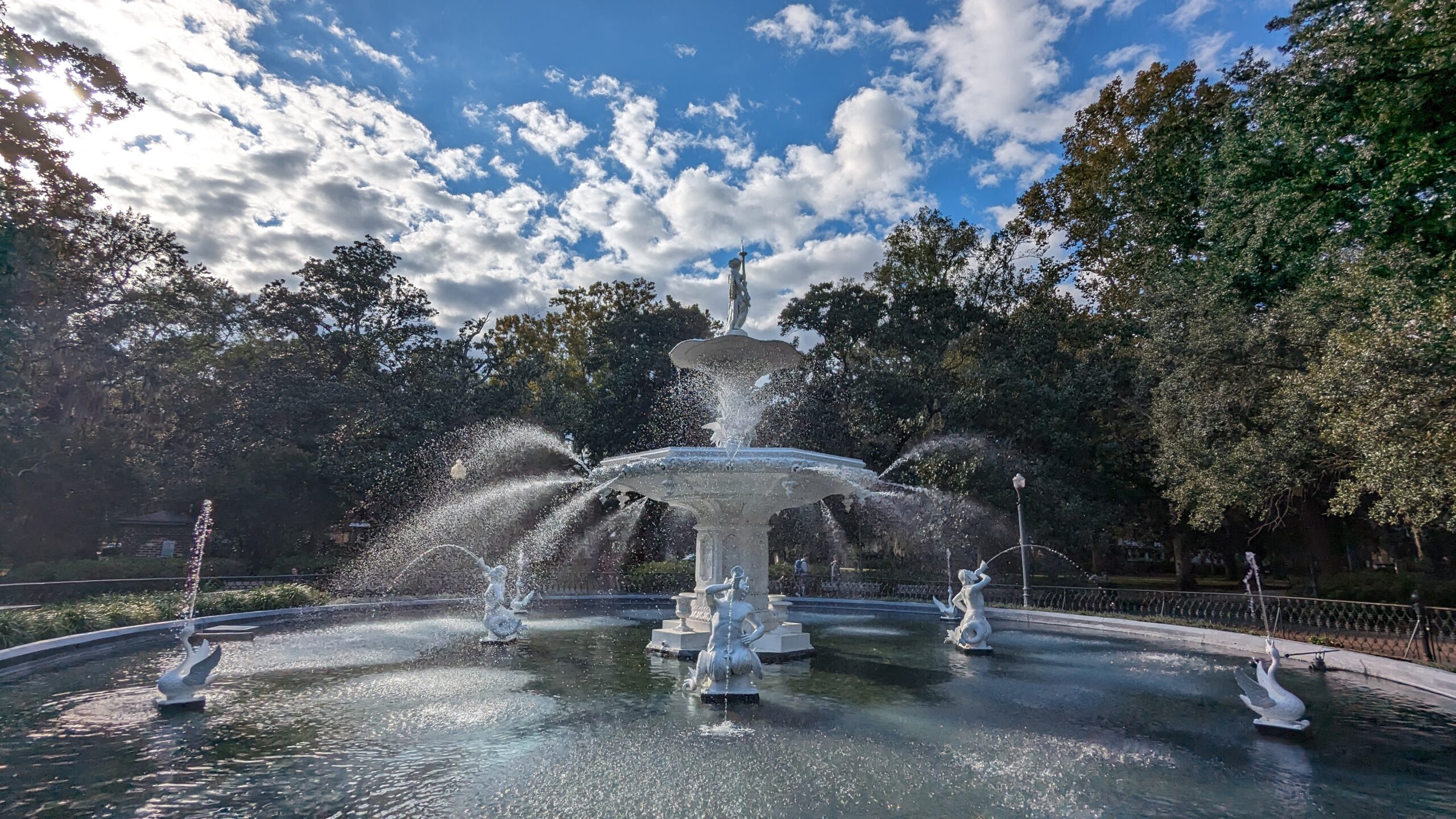
The central figure is commonly described as a Triton or a generic water deity. The surrounding figures — the swans, the smaller figures on the basin rim — are standard Victorian-era decorative vocabulary. There is no specific Savannah iconographic program here. It is ornamental rather than symbolic in any local sense. Sometimes a beautiful fountain is just a beautiful fountain. A prosperous city bought it from a catalog because it could afford to.
When the Fountain Froze — January 2018
Savannah doesn’t do winter. The city averages maybe one or two nights a year below freezing, and even that gets treated as a local emergency. So when a genuinely brutal cold snap hit in early January 2018 — temperatures dropping into the low teens — something happened that most Savannahians had never seen and haven’t seen since: the fountain froze solid.
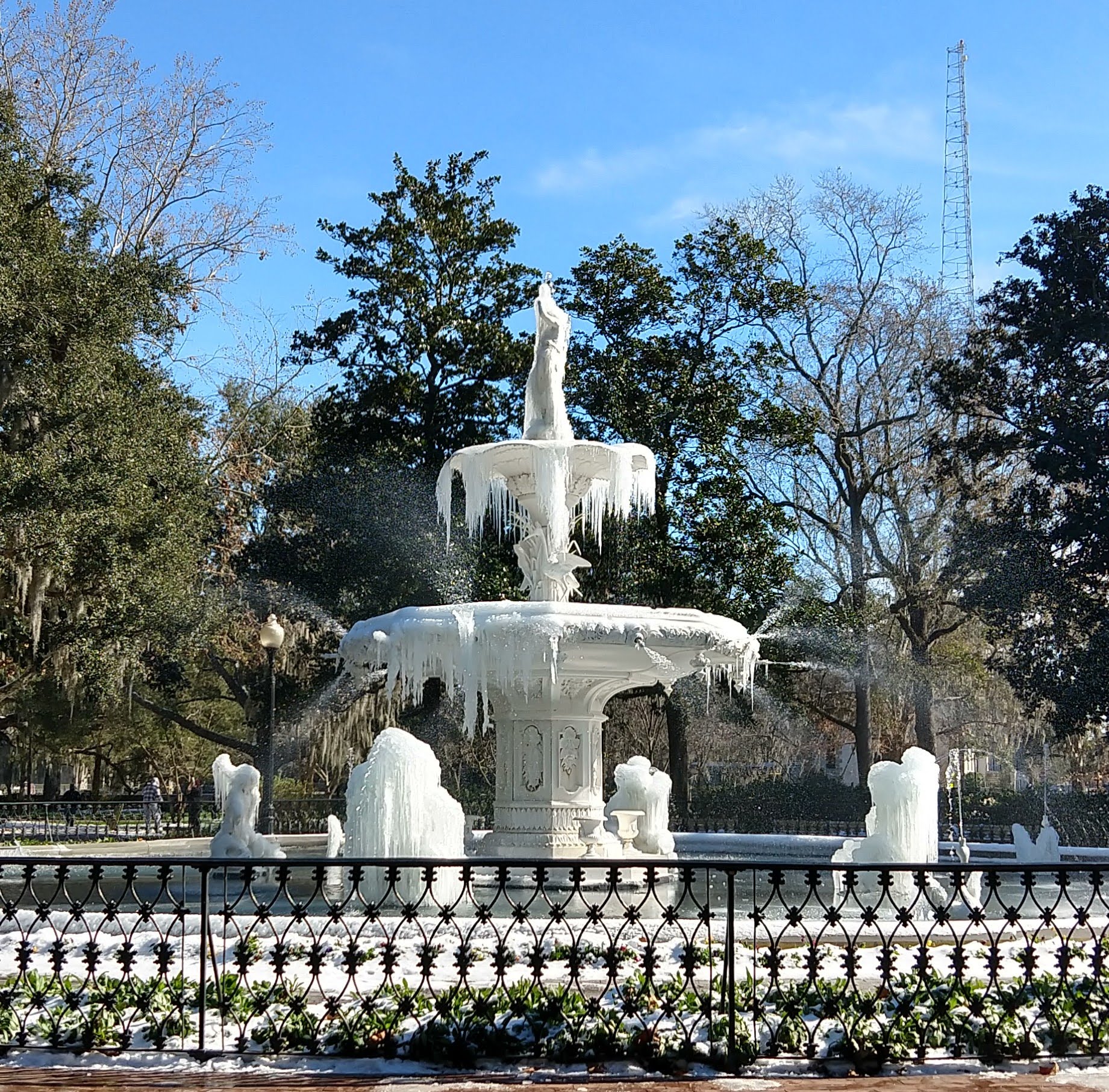
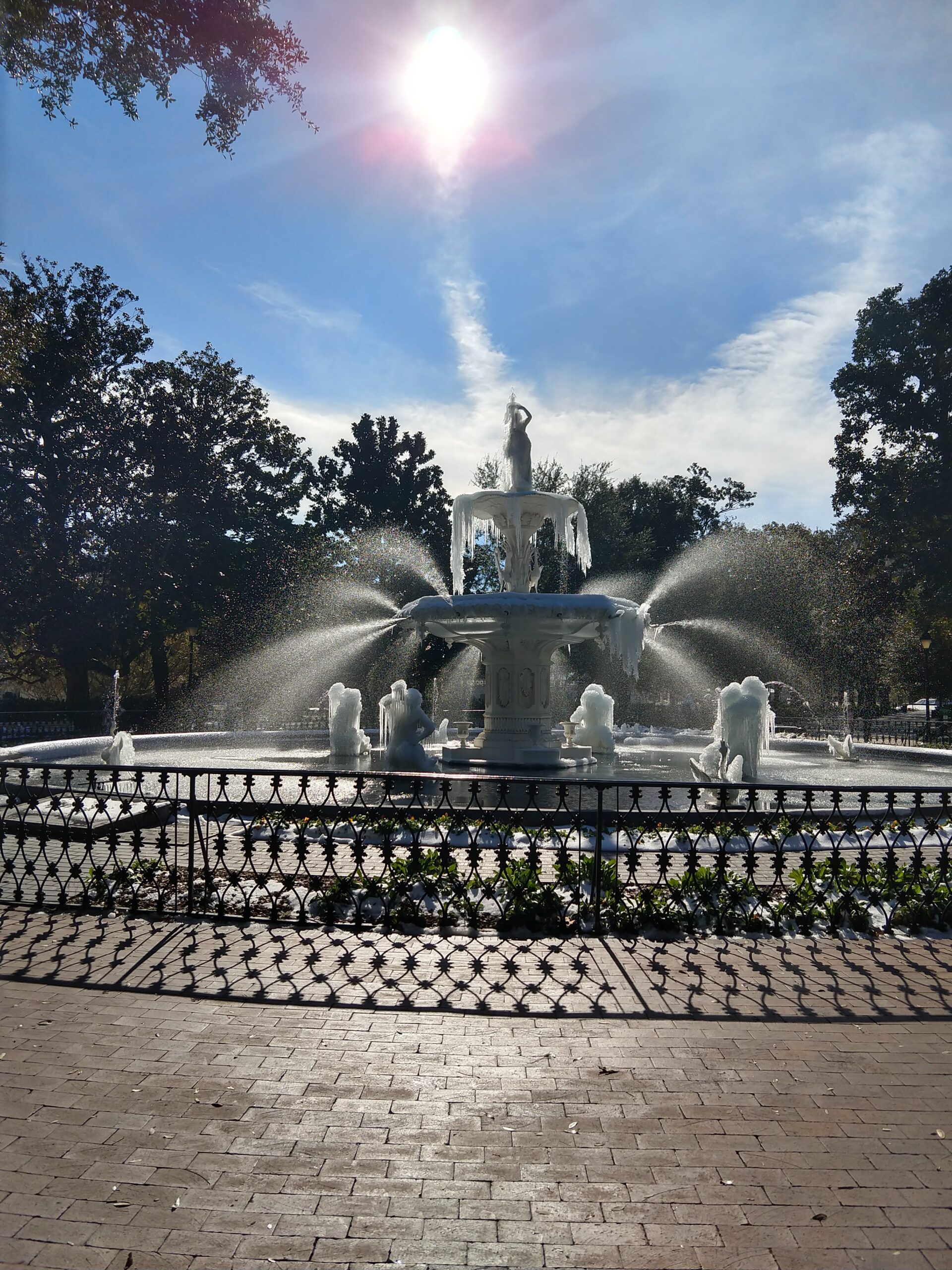
The city didn’t shut off the water in time. And here’s the part that made it extraordinary: the pumps kept running the entire time. The water hit the cast iron at 15°F and froze on contact — building up layer by layer into a thick shell of ice around every surface. But underneath all of it, the fountain never stopped. Every jet was still firing. Water was still shooting from the upper tier, still arcing from the basin statues — it just froze the instant it landed. The result was something genuinely impossible-looking: a fountain simultaneously frozen solid and in full operation.
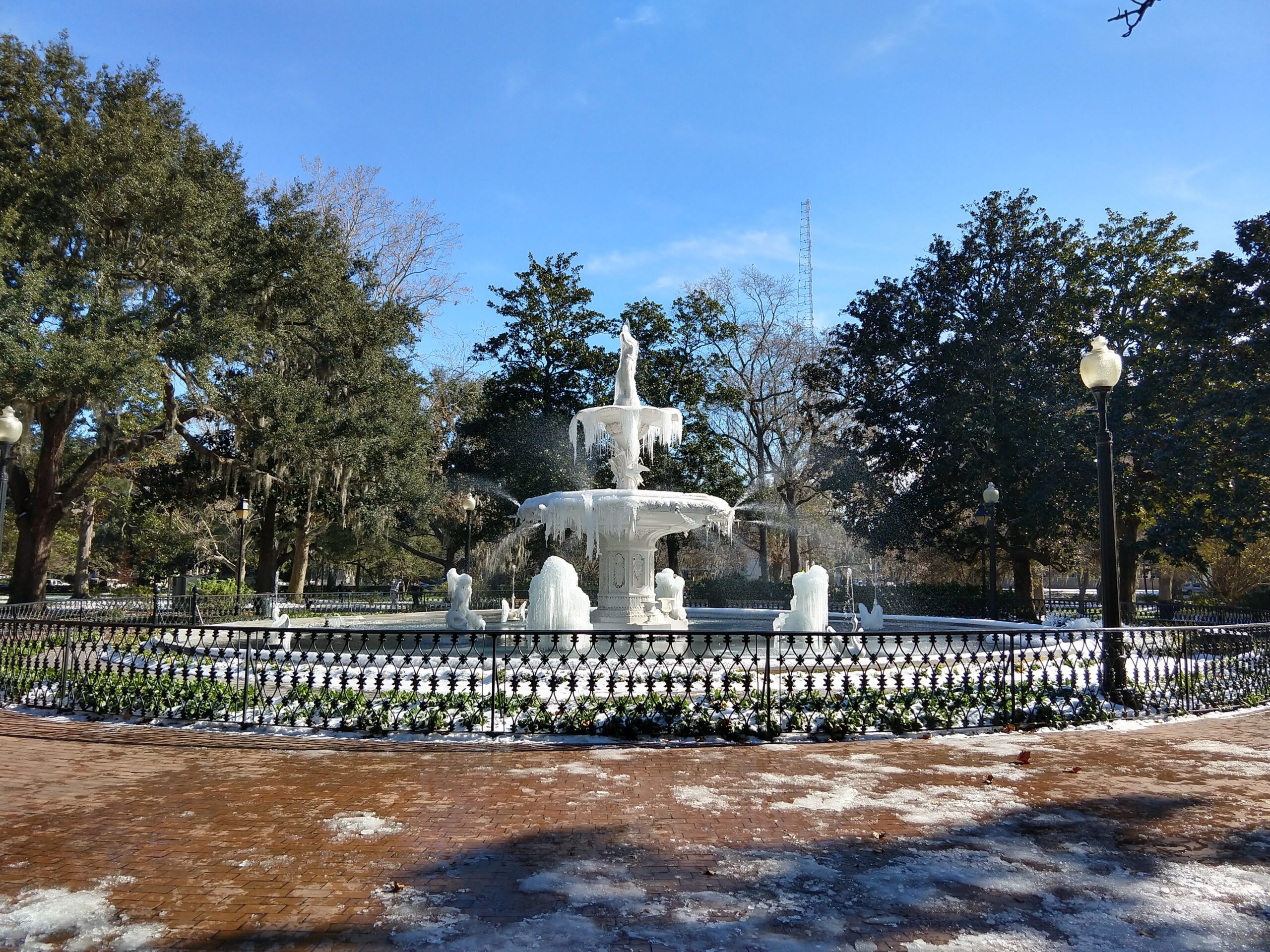
By morning, icicles a foot long were hanging from every tier. The basin statues had been consumed entirely — each one encased in its own thick column of clear ice, water still shooting straight up out of the top. The ground around the fountain was dusted with actual snow. I walked out there early and just stood there for a while, trying to process what I was looking at.
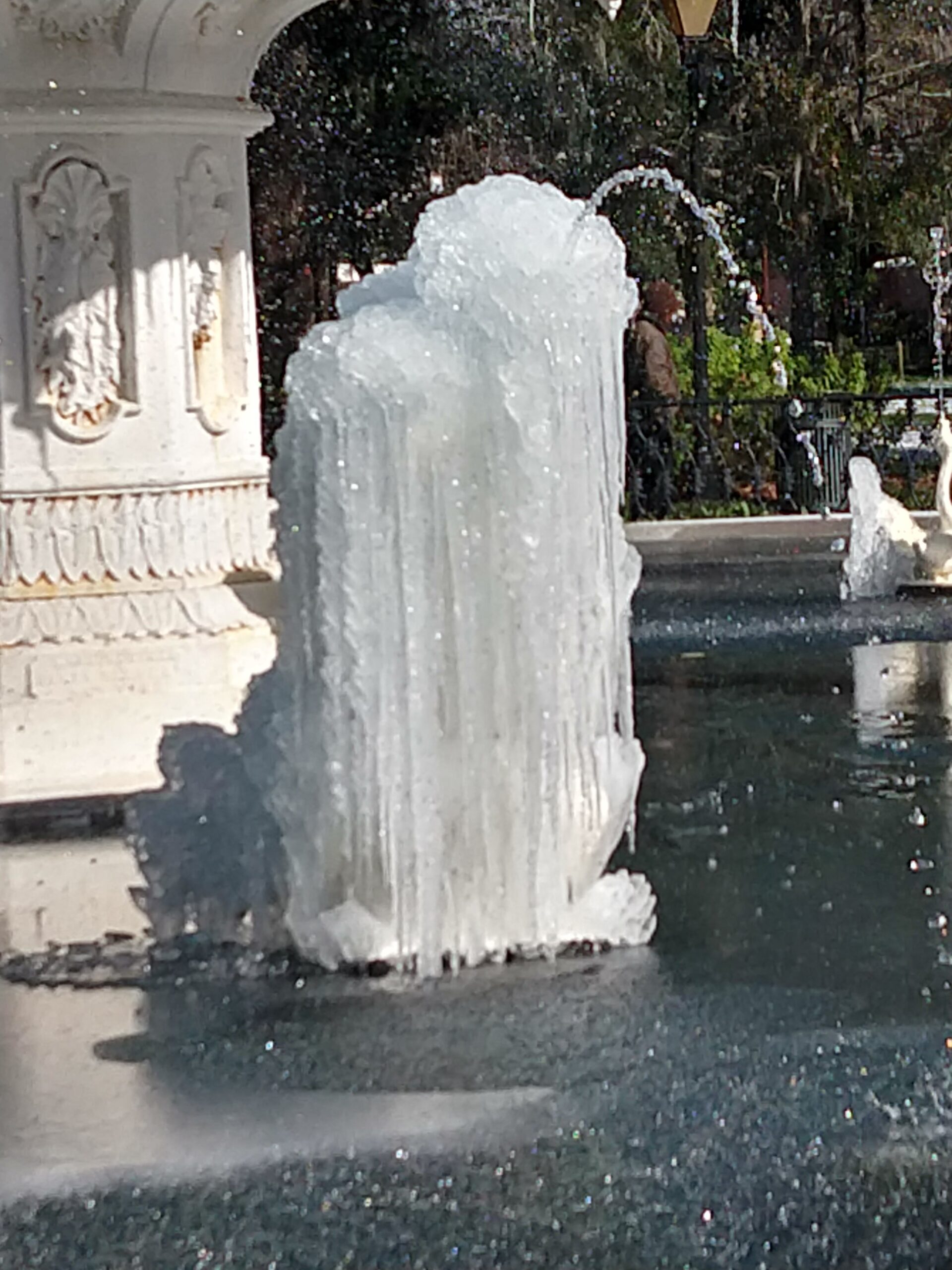
Look closely at that next image and you’ll see exactly what I mean about the pumps. That is a fountain statue — one of the basin figures that normally sits at the water’s edge — completely swallowed inside a solid column of ice. And right out of the top of that column: a water jet still firing. The fountain built a prison around itself and kept going anyway.
Half of Savannah showed up. By mid-morning Forsyth Park was packed — locals walking around the fountain in genuine disbelief, nobody quite believing it was real, everybody taking photos. Nobody in this city had seen anything like it. Most of them still haven’t seen anything like it, because it has not happened since.
Marley and I were out there that morning. We had to be — there was no question. When your city does something it has never done in living memory, you go.
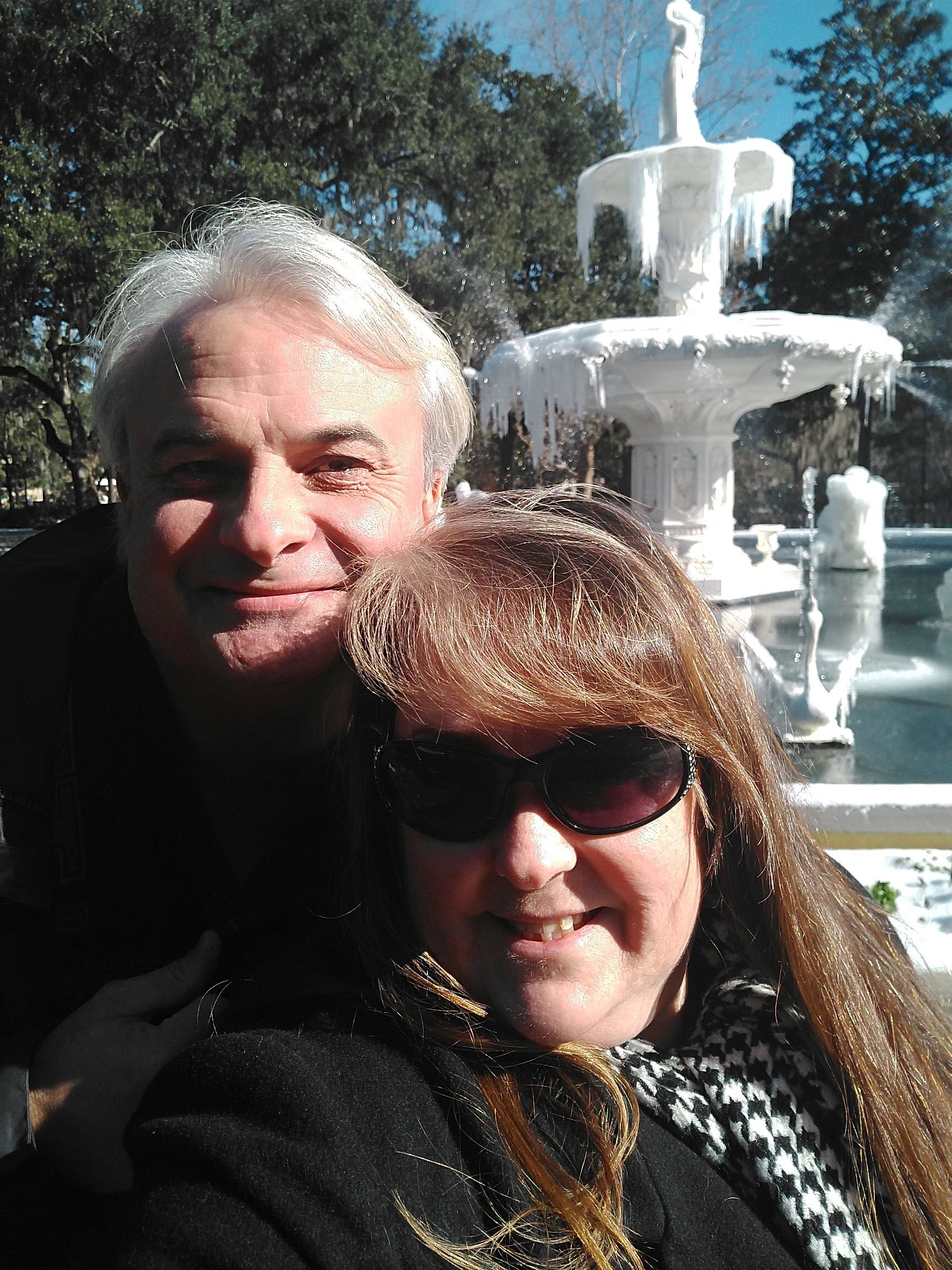
The freeze lasted about 36 hours before temperatures climbed back above freezing. After that, Savannah returned to its regularly scheduled subtropical programming and pretended the whole thing never happened. For those of us who were there, it remains one of the stranger and more beautiful things this city has ever seen.
What You’re Missing While You Line Up the Shot
Forsyth Park covers 30 acres. The fountain sits at the north end. Most visitors photograph it and leave — or walk a few hundred yards before turning around. The southern end, however, is where Savannah residents actually use the park. Past the fragrant garden, past the tennis courts, the grounds open into quieter sections that almost no tourist ever sees.
The live oaks in the southern sections are older and more dramatically shaped than the ones near the fountain. The afternoon light comes through them differently. It’s worth the walk.
The Best Time to Be There
Come early morning or late afternoon. The fountain faces east, so morning light hits it directly. At 7:30 AM, the park has joggers, dog walkers, and a quiet that the midday tourist version simply doesn’t have.
Return in the late afternoon, when the shadows from the oaks go long. The whole park turns golden at that hour. The photograph from the center path — looking south toward the fountain with the oaks framing both sides — is worth taking. Some things earn their clichés.
Experience Savannah In Person
Did you find this story intriguing?
Are you ready to experience Savannah in person?
Join me on the ghost tour I’ve been leading for over a decade — real history, real paranormal research, and the stories that don’t make it into the guidebooks. Small groups. No scripts. Just Savannah.
Select your date below — instant confirmation, full refund up to 24 hours before the tour.
🔒 Secure booking · Powered by FareHarbor · $39/person
Prefer to browse first? See all 5 tours →
RELATED READING
- The Real History of Savannah’s Squares
- How to Do Savannah in One Day Without Wasting It
- Book the Savannah Photography Walking Tour
- City of Savannah — Forsyth Park
For more from Savannah’s most authentic ghost tour guide, visit guyinthekilt.com — or book a tour directly.